Die-Casting Post-Processing
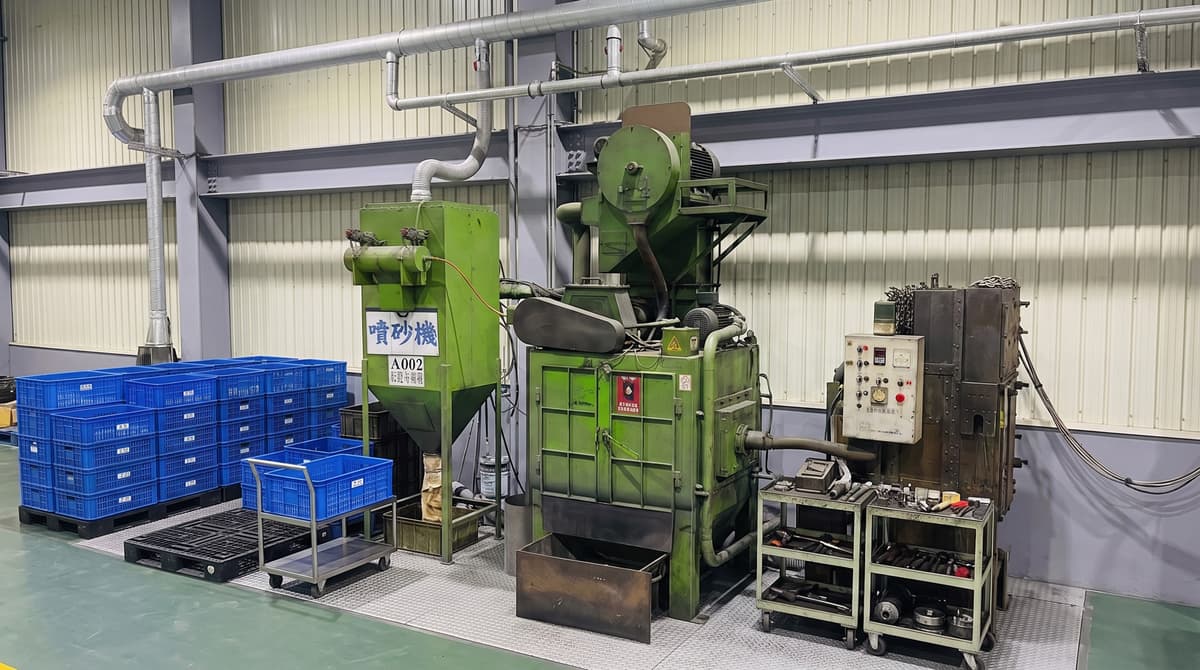
Integrates die-casting and precision machining technology to provide high-quality and efficient one-stop manufacturing services to help customers create more competitive products. Our experienced team with the ability to independently design fixtures has designed the most stable and exclusive fixture that does not damage the surface according to the irregular characteristics of the die-casting parts, achieving an industry-leading processing yield. After the die-casting parts are cast, they often undergo secondary processing to make the product more in line with requirements in terms of accuracy, function and appearance.
The main advantages ofAre as follows:
8 Major Advantages Of Die-Casting Technology
1. Improve Dimensional Accuracy And Tolerance Control
Through precision processing such as drilling, milling, and grinding, the dimensional tolerances of die castings can be effectively corrected to achieve higher precision in key dimensions to meet precision assembly requirements.
2. Achieve High-Precision Hole Position And Thread Processing
Drilling and tapping after die-casting can ensure accurate hole position and stable thread quality, and improve the structural reliability of the product.
3. Improve Surface Flatness And Contact Surface Quality
Through milling, grinding and other processing, the flatness and contact surface accuracy can be improved to ensure that the parts have a good matching effect during assembly or close fit.
4. Removing Burrs And Trimming Appearance
Secondary processing can effectively remove burrs, edges and uneven surfaces produced during the die-casting process, improving the overall appearance quality of the product.
5. Improve Assembly Efficiency And Matching Accuracy
Precision-machined parts can improve the matching accuracy during assembly, reduce assembly difficulties and defective rates, and improve overall production efficiency.
6. Increase Product Functions And Design Flexibility
Some complex structures or special functions cannot be completed by one-time die-casting, and diversified design requirements can be achieved through secondary processing.
7. Improve Product Stability And Reliability
By refining key dimensions and structures, deformation and errors can be reduced, and the stability and durability of the product can be improved for long-term use.
8. Support Customization And Diversified Applications
Secondary processing can be customized according to customer needs and is suitable for different industrial applications, such as electronics, automobiles, machinery and communication equipment, etc.
01. Precision Machining
Drilling And Tapping
• Desktop drilling machine and tapping machine: The operator manually operates the desktop drilling machine or uses a hand-operated or foot-operated pneumatic/electric tapping machine to process single holes on the workpiece one by one.
• Multi-axis drilling/tapping special machine: Uses a "multi-axis device" to branch a single spindle into multiple output shafts. As long as the machine is pressed down once, multiple holes can be drilled or tapped at the same time.
CNC
• Milling machine: The workpiece is fixed on the workbench. The milling cutter rotates at high speed and moves along the X, Y, and Z axes to cut the workpiece. The excess material is removed layer by layer using 3-axis, 4-axis or 5-axis processing.
• Lathe: The workpiece is clamped on the spindle and rotates at high speed, while the cutting tool is fixed on the turret and moves linearly along the axial or radial direction for cutting. The structure of the processed workpiece must have "axial symmetry."
• Five-axis machining: In addition to the traditional three linear axes of X, Y, and Z, the machine also adds two rotating axes. The tool can approach the workpiece from any angle and process extremely complex geometric shapes with undercuts or continuous free-form surfaces.
02. Surface Treatment
• Sandblasting: The use of drum sandblasting to produce a uniform matte surface can effectively cover up the tiny flow marks, cold streaks or pore shadows that are common in the die-casting process, making the surface look more detailed and smooth. Sandblasting is more suitable for processing complex die-casting parts with deep holes, blind holes or irregular geometric structures.
• Vibration grinding: Surface treatment technology that uses a grinding stone to generate high-frequency friction with the casting in a vibration container. It can penetrate deep into the internal holes, grooves and tiny dead corners of the die casting, and effectively remove the burrs generated by the parting line. With a suitable detergent, residual release agent and metal shavings can be removed while grinding, simplifying the subsequent cleaning process.
• Polishing: Through mechanical tools or manual polishing, through the physical friction between the abrasive and the polishing wheel, the surface roughness of the casting is minimized, and the rough surface of the die casting is transformed into a mirror or delicate satin texture.
• Baking paint: Whether it is liquid spray paint or powder coating, a tough protective film is formed on the surface of the casting through high-temperature curing, providing a variety of color choices. The paint film can completely isolate air and moisture, effectively preventing oxidation and discoloration of aluminium and zinc alloys in humid environments.
• Chromate: A chemical conversion film is formed on the surface of the die casting, which effectively isolates air and moisture and prevents "white rust" or oxidation reactions in aluminium alloys. Chromate treatment provides excellent corrosion resistance while retaining the conductive properties of the metal.
• Anode: The hardness of the anodized film is much higher than that of the aluminium alloy substrate, which can effectively prevent the die-casting parts from being scratched or worn in daily use. After treatment, it can isolate air and moisture and prevent the die-casting parts from producing white rust or blackening.
• Electroplating: For electroplating of die-cast zinc alloys and aluminium alloys, a layer of metal film (such as chromium, nickel, gold, silver, etc.) is deposited on the surface through electrolysis. In addition to being beautiful, it also provides excellent wear resistance and chemical corrosion resistance.
03. Burr Processing
• Manual deburring: Use files, sandpaper, pneumatic engraving machine or manual trimming knife to scrape and polish local burrs. It is extremely flexible and suitable for processing complex structures or dead corners.
• Stamping deburring: Make a special punch, place the die casting under the punch, and instantly punch out the burrs through the shearing force of the upper and lower molds. It is extremely efficient, and the deburring effect is consistent and clean. • Vibration grinding/barrel grinding:Put the casting into a vibrating machine or barrel together with the grinding stone, water and abrasive. Through the continuous shaking or rotation of the machine, the grinding stone and the casting rub against each other to remove burrs, chamfer and polish the surface. A large number of workpieces can be processed simultaneously and the surface roughness can be improved.